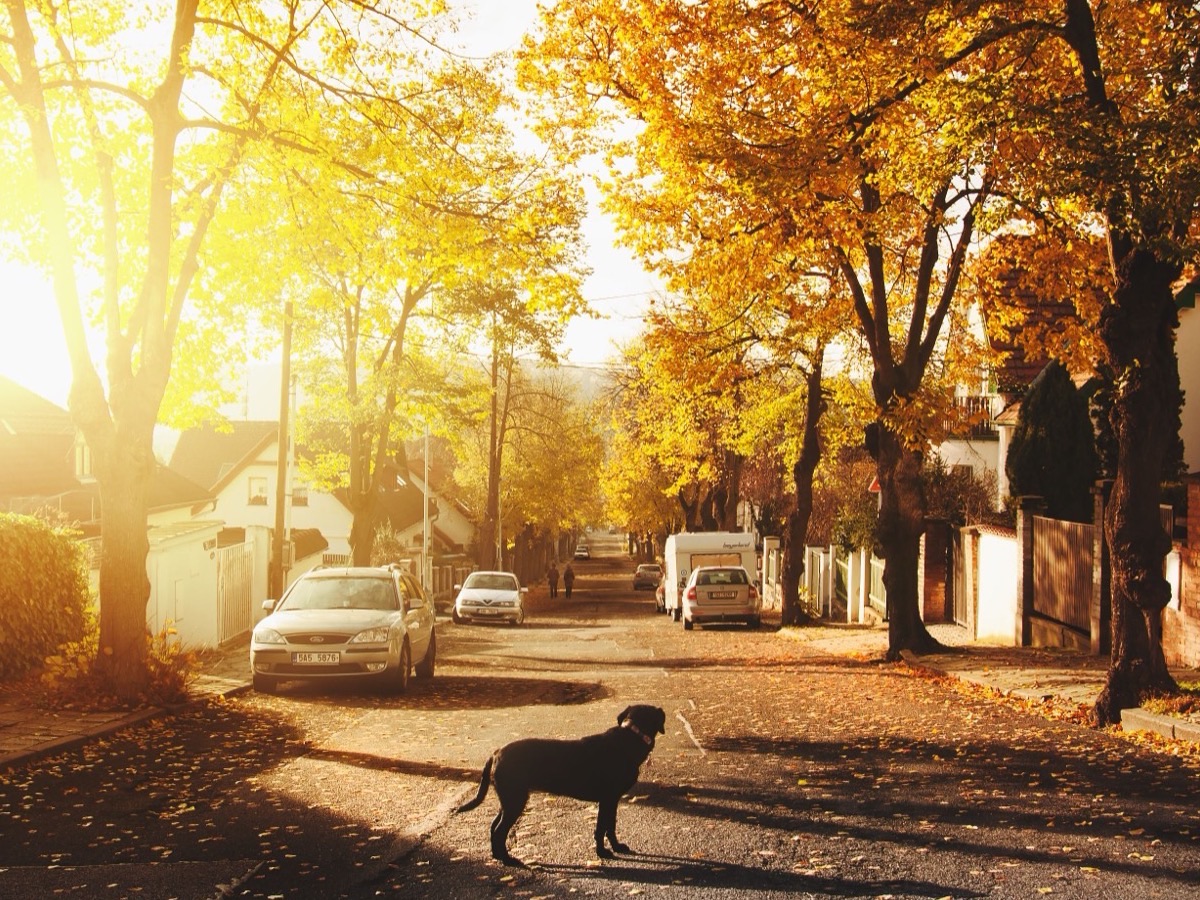
The first walk is not really exercise. It is a conversation held at pavement level, and it sets the tone for everything that follows.
Nell wakes me at ten past six, not with a bark but with a pointed stare and one cold nose against my elbow. She is twelve now, a terrier cross with a beard that collects crumbs, and she has never once needed an alarm clock. For years I rolled out of bed and took her round the block in a fog, treating the walk as a chore to clear before work. Then I started paying attention, and the first walk of the day became something else entirely.
What the first walk is for
Dogs do not wake up needing distance. They wake up needing news. The pavement outside the house is a bulletin board: who passed in the night, what the fox did, whether the bin men came early. Nell reads it with her nose down and her tail up, and if I hurry her past, she spends the rest of the morning slightly behind the day.
So the first walk is now slow, and it is short. Fifteen minutes, most mornings. It is not the walk where we cover ground; that comes later, if it comes at all. This one exists to let her catch up with the neighbourhood and to let both of us leave the house in a decent mood.
A route with room to stop
We keep to the quiet streets behind ours, where there is a grass verge and few cars. The same route every day, more or less, because familiarity is the point. Nell knows the corner where the old spaniel lives and the wall where the starlings gather. She knows the short cut to the park gate. A route she can predict frees her to think about everything else.
If you are choosing a morning route, look for places a dog can stand still without being in the way: a wide verge, a low wall, the edge of a green. Then let them stand. A dog allowed to sniff for a full minute at the same tuft of grass is not wasting time; she is filing a report.
Twelve years old, and still learning
Nell's age has changed the walk more than anything else. She no longer wants the long loop she loved at five. In cold weather her back legs stiffen, and the first ten minutes are slower than the rest. We go out later than we used to, when the sun has had a chance at the pavement, and we take the flat way round.
There is a temptation to think a short walk is a failure. It is not. Three short walks suit an old dog better than one long one, and the morning version is the one she values most, because it comes after a night of nothing to do.
Other people, other dogs
The morning is full of dogs being walked by people in a hurry. Nell likes a greeting but does not need one, so I ask before we stop. Some owners say yes and keep walking, which means a moving hello. Some say yes and mean it. Some are already steering away, and that is an answer too.
We give a wide berth to anyone with a tight lead and a fixed stare. By half past six, most of the dogs out are either very old or very young, and neither type is at its best. Nell is allowed to decline. She is also allowed to be declined, which she takes with more grace than I do.
Coming home
Back at the door, the ritual matters. Paws wiped, a drink, a biscuit broken in two. Nell goes to her bed by the radiator and sighs the sigh of a job well done. I put the kettle on with the feeling that the day has started on its own terms rather than mine.
It is only a walk round the block. But it is also the first thing we do together each day, and it is worth doing well.