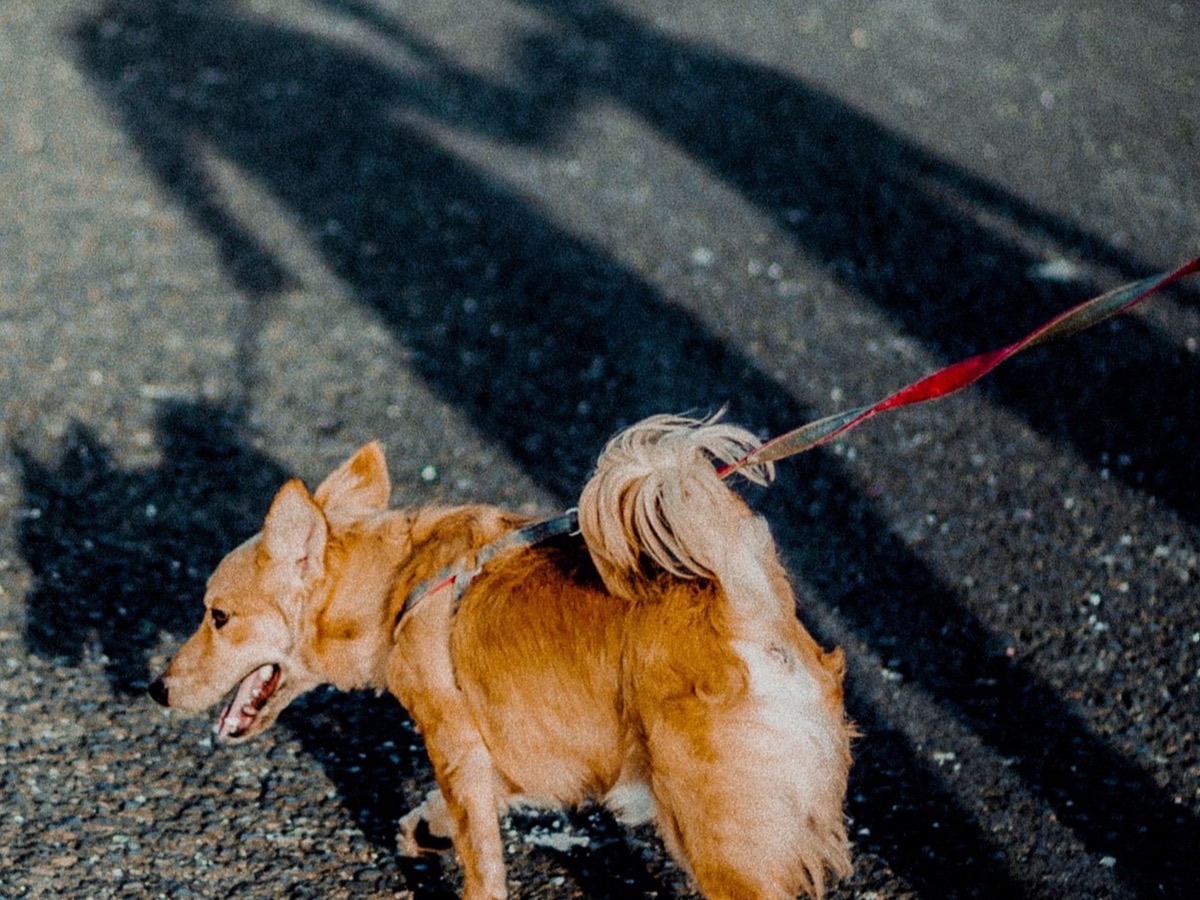
A tight lead is not disobedience. It is a dog moving at the speed of her own curiosity while the person at the other end has forgotten to be interesting.
Alfie is a young working cocker with a tail that never stops and a walk that looks, from a distance, like waterskiing. His owner, Ruth, came to me with a wrist support and an apology. “He pulls,” she said, as though confessing to a crime. Alfie did not look sorry. He looked like a dog who had somewhere to be, and he was prepared to take Ruth with him.
Loose-lead walking is the most requested thing in my line of work, and the most misunderstood. It is not about teaching a dog to walk slowly. It is about teaching a dog that the space beside you is worth staying in.
The lead is a conversation
A tight lead does not restrain a dog so much as inform them that they are winning. Every step forward is rewarded by movement. The dog pulls, the person follows, and by the end of the week both have agreed on the arrangement.
The change begins with what happens when the lead goes tight. You stop. Not sharply, not with a yank, just stop and wait. The first time, the dog is baffled. The second time, they turn to look at you. That look is the whole trick, and it is why the next part matters so much.
Start where there is nothing to see
Most people practise on the way to the park, which is like learning to drive on a motorway. Find a dull street, a quiet car park, a stretch of pavement with no dogs and no pigeons. Ten minutes there is worth an hour of being dragged round the block.
Walk a few steps, stop, and wait for the dog to glance back. The instant they do, say their name, mark it with a click or a “yes”, and walk on. The reward for checking in is progress. You do not need a pocket of sausages for this, though a few help at the start.
A dog who looks at you on a walk is a dog who has decided you are part of the plan. That is worth paying for, especially in the early days. A treat delivered at your own knee, not flung ahead, teaches the dog that the good stuff happens where you are.
Gradually, the checking becomes more frequent and the lead slackens without a word. When it tightens, you stop again. The dog learns two things in quick succession: pulling does not work, and paying attention does.
When the lead goes tight
It will go tight. A cat, a cyclist, another dog, the bin lorry: the world is full of reasons to surge. In those moments, let the lead come taut for a second, then stop and wait. Do not reel the dog in. If they are too far gone, turn and walk a few steps the other way, then resume.
For a dog over threshold — barking, lunging, deaf to everything — give more distance. A dog who cannot hear you is not being stubborn. They are simply at the limit of what they can process, and walking them closer to the trigger will not help.
Equipment
A fixed lead and a well-fitted harness are enough for most dogs. A front-clip harness can take the edge off a determined puller while you train, and a long line is useful for practising in open ground. Head collars work for some dogs and suit very few of them immediately; introduce one slowly, with treats, or you will spend a fortnight teaching the dog to rub their face along the pavement.
What you do not need is a retractable lead for training. The constant tension teaches a dog that pulling pays.
The long game
Ruth and Alfie took six weeks to walk a mile without a taut lead, and their first attempt took twenty minutes to cover a hundred metres. Ruth thought it was going badly. It was not. She was learning to be the most interesting thing on the street, and Alfie was learning that staying with her was the easier way to get where he wanted.
Loose-lead walking is not obedience for its own sake. It is a way of making the walk pleasant enough that you will do more of it. A dog on a slack lead has room to sniff, and a person with a loose wrist has room to enjoy the morning.