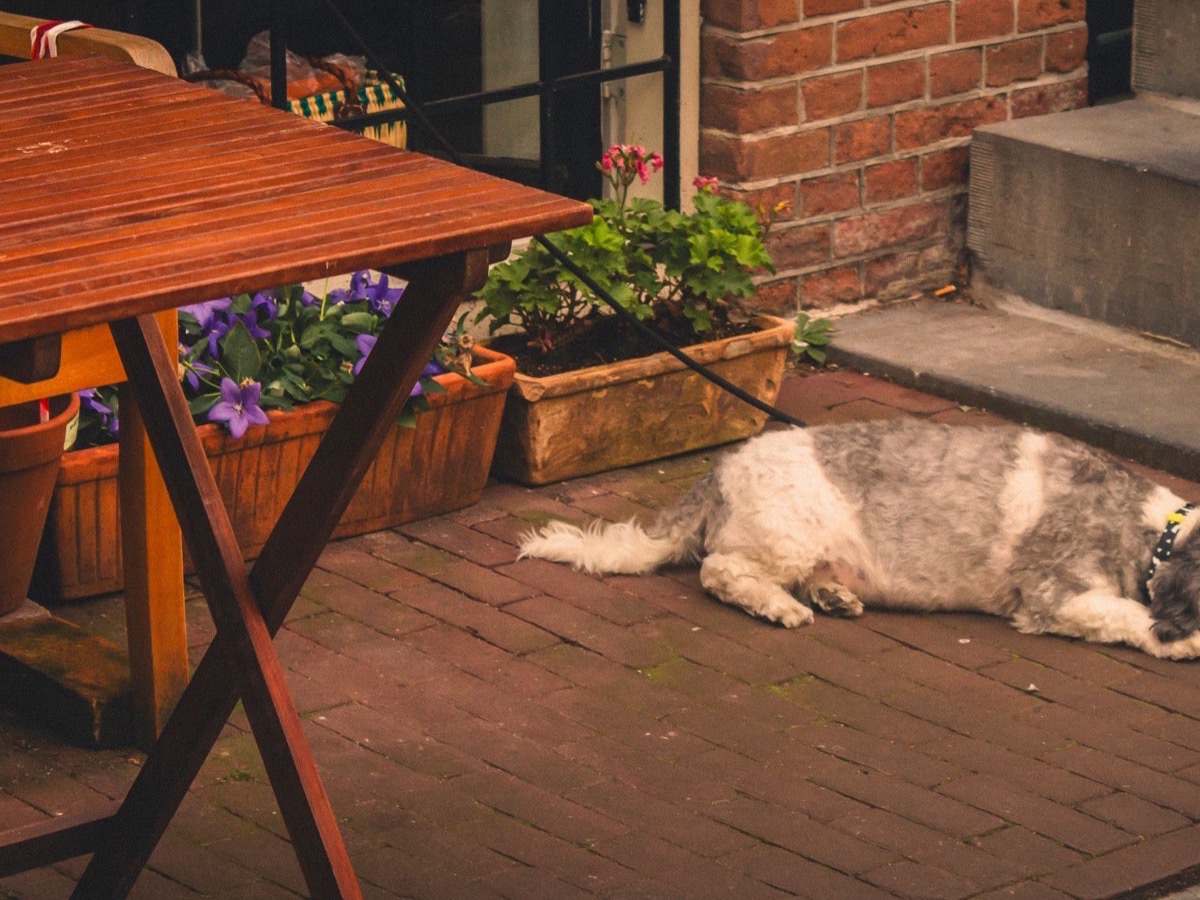
A dog can learn to be a good city companion, but not by being thrown into the deep end. The trick is choosing the right pavement, the right table and the right moment to leave.
Nell has been to more cafés than most people I know, largely because she is small, quiet and willing to lie under a table for the price of a crust. She was not born that way. The first time I took her into one, at two years old, she barked at a waiter and knocked over a sugar caddy. We drank our coffee standing up.
City life asks a lot of a dog: crowds, noise, traffic, other dogs, food at nose height, the constant temptation to greet everybody. Some dogs take to it. Most need to be taught, in stages, starting well away from the espresso machine.
Learn your dog's city face
Some dogs are sociable and want to meet everyone. Some are sociable and want to meet no one. Both can be fine in public, but they need different handling. Watch for the early signals: a stiffened stand, a raised tail, a closed mouth, a sudden interest in the gutter. Those are the moments to give space, not to push on.
A dog who is scanning the horizon is not relaxed. A dog who can sniff a lamp post while a bus goes past is. Learn the difference before you book a table.
Café manners start on the pavement
Before any café, practise sitting outside one. Not entering, just sitting on a bench nearby with a coffee and a dog, for five minutes. Treats for lying down. Then ten minutes. Then a table outside, at the quiet end, with the dog on the inside of the pavement and a short lead under your foot.
Inside is the last step, not the first. Choose an off-peak hour, a corner table, and a shop with a wide aisle. Ask before you go in; not every café allows dogs, and the ones that do often have a policy about where they can sit.
Space, shade and water
A dog under a table needs room to lie flat without being trodden on. Keep the lead short enough that they cannot wander into the walkway, long enough that they can shift position. If the table is cramped, ask for another.
Water is the thing people forget. Ask for a bowl, or carry a folding one. In summer, shade matters more than the coffee. On very warm days, a pavement table in full sun is a test rather than a treat, and dark tarmac holds heat long after the air has cooled.
The pavement tax
Every busy street has one: the leftovers, the chewing gum, the dropped chips, the puddle with something in it. Nell has eaten things on the Gloucester Road that I would rather not name. A dog who is allowed to hoover the pavement will spend most of the walk with their head down and their attention elsewhere.
Teach a simple “leave it” at home, with a treat under a shoe, before you need it outside. In town, keep a handful of kibble in your pocket and pay the dog for checking in. A dog who looks up is a dog who is not eating a kebab.
Know when to leave
The best café dog is the one who leaves before they have had enough. If Nell starts shifting, panting, or giving the table leg a hard stare, we pay and go. A short, good visit beats a long, frayed one, and the next visit starts from a better place.
Leave also if the café gets busy, if a loud group sits down, or if another dog arrives and the tables are too close. None of that is a failure. It is the sort of judgement that makes a dog welcome back.
A dog who can come to a café is a dog who can come more of the way into your life. That is worth a few dull afternoons on a bench. But the café is not the achievement. The achievement is a dog who can lie quietly while the world clatters around them, and a person who knows when to take them home.